
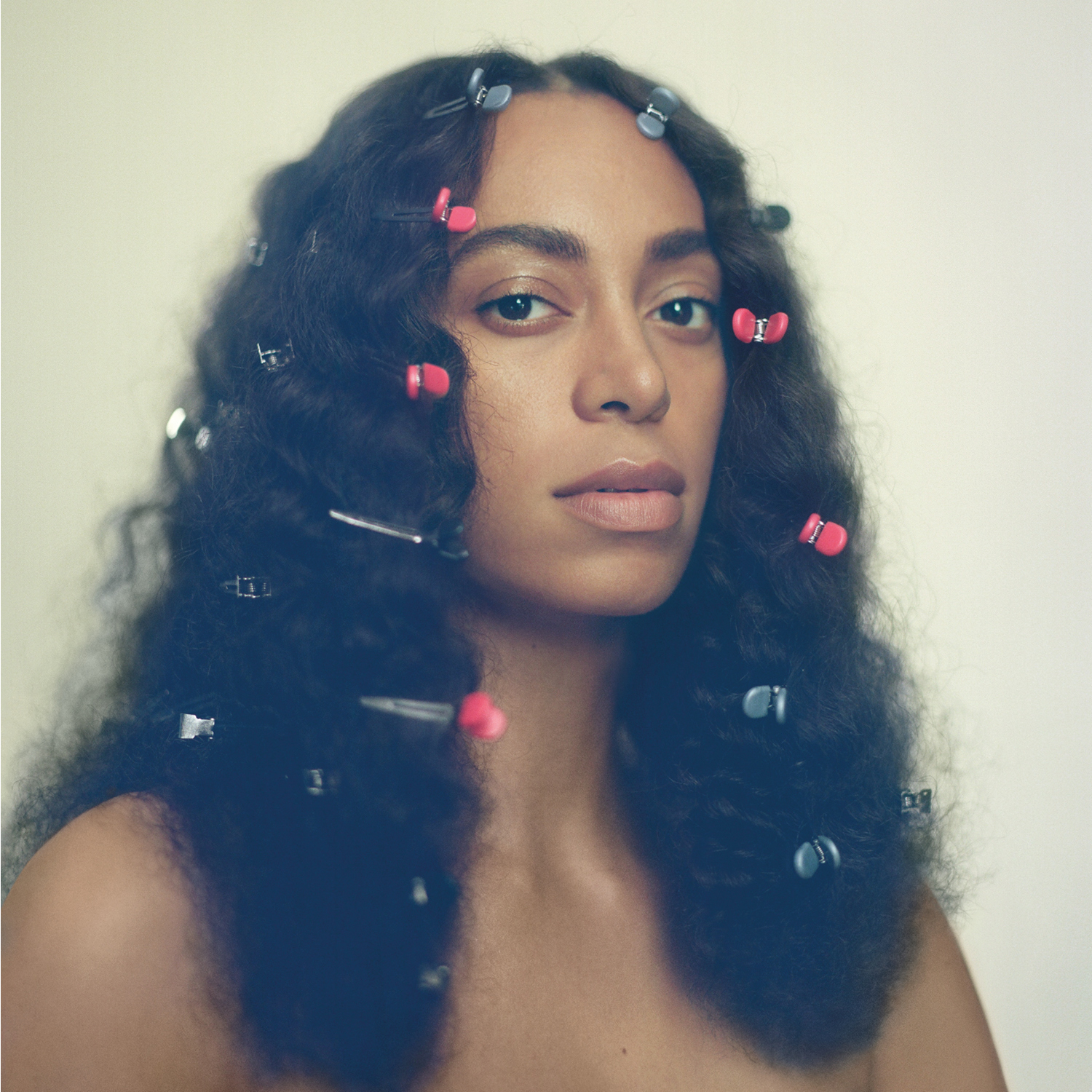
This past Friday, Solange released her third studio album, A Seat at the Table. I’ve had three days to listen and re-listen and re-listen again to this project, and my ears and heart are full.
To have a seat at the table is to have power and influence; it is to be included and have your opinions heard and validated. A Seat at the Table is Solange’s first LP since 2008, and it was well worth the wait. In her own seat, Solange gives us a seat with the 21-track “confessional autobiography and meditation on being black in America,” per the album notes. The body of work is “a project on identity empowerment, independence, grief and healing,” Solange said in a press release.
Solange, who wrote and arranged the entire project herself, started writing A Seat at the Table about four years ago. In an interview for Stereogum, Solange outlines the details of her inspiration for the album, including her own self-discovery, musical influences, personal influences, and New Orleans, where she moved to create the album.
Sonically, A Seat at the Table is outstanding. Certainly molded to be listened to as a full album, the songs seamlessly flow into each other, dripping in and out of interludes, with a smoothness in theme that easily drifts with the album’s assorted feelings.
The album begins with the gentle opener, “Rise.” “I’m weary of the ways of the world” – a sentiment many black Americans feel – is expressed in the second track, “Weary,” where we also hear the lyric “And do you belong? I do” – the title of an article Solange penned a few weeks ago about being a minority in predominantly white spaces.
Master P’s first entrance is made known in the album’s first interlude, followed by “Cranes in the Sky,” perhaps my favourite on the album. The song is airy, delicate, and pretty; but the subject matter is heavy. With a sound sometimes reminiscent of Minnie Riperton, assisted by R&B singer Tweet (two of Solange’s inspirations for the album), Solange sparklingly sings about attempting to drink, sex, or even dance away the pain. The visual created for the song is captivatingly stunning.
In the second interlude, Mathew Knowles, Solange’s father, details being one of seven black students to integrate his school, the terror brought on by parents and KKK members, and the anger that ensued in him as a result. “Mad,” though soft and bouncy, is directly focused on anger. Strikingly, Lil Wayne’s biting verse is filled with rage but without an elevated voice. “You have a right to be mad,” Solange sings to validate the black community’s anger. “I got a lot to be mad about,” she repeats over a vintage soul beat.
Drums and bass hammer through “Don’t You Wait” with an electronic pulse before Tina Lawson, Solange’s mother, speaks in the third interlude on black culture and the projected threat that goes with celebrating it. She makes clear that black pride is not anti-white and that black people should not be suppressed into not being proud of their culture. Immediately, “Don’t Touch My Hair” follows. The electro-funk tune speaks to uninvited fingers running through her hair, a common experience for many black women. The visual for the song is equally beautiful. Solange, an integral player in the natural hair movement since her chop in 2009, features herself and others in a myriad of black hairstyles.
In the following interlude, the horns behind Master P’s narration scream light and optimism. “Where Do We Go” slowly and jazzily asks: what’s next?
Master P speaks on his personal experience with self-worth and independence in “Interlude: For Us By Us,” a nod to the ’90s fashion label of the same name. “What do you think I’m worth if this white man offer me a million dollars?” he asks.
“F.U.B.U.” holds the album’s most overt statement, centering around the lyric “this sh*t is for us.” The New Orleans jazzy, horn-filled, slow-swinging anthem is an exclamation of blackness. Solange addresses non-black, particularly white, listeners directly with “don’t feel bad if you can’t sing along, just be glad you got the whole wide world,” perhaps specifically in reference to the song’s heavy use of the n-word and broadly to the album at large.
“Borderline (An Ode to Self Care),” like “Weary,” is a sigh for her and also the black community. “I’m tired,” Solange sings. “Let’s take an intermission” is her direction to take a break and practice self-care. “Don’t let anybody steal your magic” is sung in a cappella three-part harmony by Solange, Kelly Rowland, and Nia Andrews in the next interlude. Uninterrupted begins “Junie,” named after and inspired by Junie Morrison – a joyous, synthetic funk number with a ’70s sound and a heavy bassline.
Again, Master P speaks on No Limit Records, then “Don’t Wish Me Well” returns to a relaxed, electronic vibe with a touch of soul. “Interlude: Pedestals” holds reminders of self-care and that we are all imperfectly human.
“Scales” is a slow, slightly unsteady track that comes right before “Closing: The Chosen Ones.” The album ends with the same horn section that played on Kanye West’s “We Major.” Master P proclaims, “We come here as slaves, but we going out as royalty” – a striking, uplifting end to a triumphant and medicinal album.
A Seat at the Table is such a beautiful and important piece of work, piece of art. Musically and message-wise, this is an incredible album. Solange, thank you for making this for us. We needed it.








1 comment
Leave your reply.